Why Never Use a Rolling Pin (Usually)
A rolling pin crushes the air bubbles developed during fermentation, producing a dense, flat crust. For Neapolitan-style pizza, always stretch by hand. The only exceptions: very thin Roman-style pizza al taglio, gluten-free dough (too fragile for hand stretching), and crackers.
Room Temperature Is Critical
Cold dough is stiff and will tear. Always bring dough to room temperature for at least 90 minutes before stretching. Properly rested dough stretches easily and bounces back minimally. If dough springs back aggressively, cover and rest another 20–30 minutes.
The Gravity Method
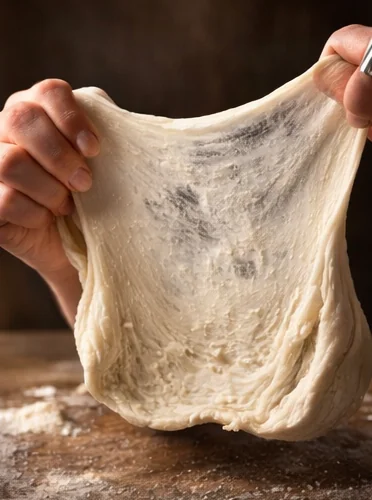
Flour your surface and hands. Pat the dough ball into a disc (about 15cm). Drape it over your knuckles and let gravity do the work—rotate while the dough hangs and stretches from its own weight. Work from the center outward. Never stretch the edge—this destroys the cornicione.
The Toss (Optional)
Tossing pizza in the air is theatrical but functional—centrifugal force stretches the dough evenly. It takes practice (and tolerance for floor-pizza accidents). Not necessary for excellent pizza. Focus on hand stretching first.
Repairing Tears
Small tears: press edges together firmly and reinforce with a patch of dough from the rim. Large tears: ball up the dough, rest 20 minutes, try again. Don't add water to repair tears—it makes things worse.