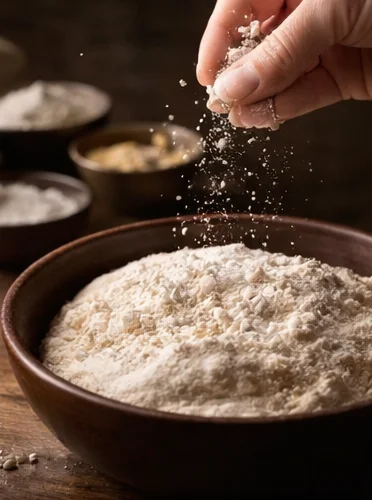
Why Flour Choice Matters
Flour is the backbone of pizza dough. Its protein content determines gluten strength, water absorption, and ultimately the texture of your crust. The milling grade affects extensibility and browning. Choosing the wrong flour for your pizza style is one of the most common mistakes home bakers make.
Tipo 00 Flour (Italian)
Italian Tipo 00 refers to the grind fineness—double zero is the finest grind, producing a silky, smooth flour. Good Tipo 00 for pizza has 11–13% protein. It creates an extensible, smooth dough that bakes with a tender crumb and beautiful browning. The gold standard for Neapolitan pizza. Look for 'W250–W330' on Italian professional flours.
Bread Flour (Strong Flour)
With 12–14% protein, bread flour creates a stronger gluten network. The dough is slightly stiffer and more resilient. Excellent for New York style (needs structure to support large slices), deep dish, and focaccia. Produces a slightly chewier, crispier crust than Tipo 00.
All-Purpose Flour
At 10–12% protein, all-purpose flour works for pizza but is the weakest performer. It produces softer, less elastic dough that tears more easily. Acceptable for quick doughs where a little chewiness doesn't matter. Readily available and inexpensive.
Whole Wheat & Ancient Grains
Whole wheat flour adds nutty flavor and fiber but significantly affects gluten development—the bran cuts gluten strands. A 20% whole wheat blend (80% bread flour, 20% whole wheat) adds flavor without sacrificing too much structure. Pure whole wheat pizza dough requires higher hydration and longer fermentation.