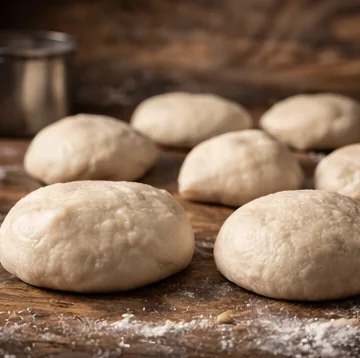
Pizza Dough — Six Recipes, One for Every Baker
The dough is the pizza. Sauce and toppings are details. Here are six tested recipes — each built for a specific goal, from maximum flavor to maximum protein — with exact gram weights, fermentation timings, and honest guidance on when to use which.
Why Dough Choice Matters More Than You Think
Most home pizza failures happen before any topping touches the dough. Wrong hydration makes it tear. Wrong fermentation makes it bland. Wrong flour makes it tough. Getting the dough right is a decision, not an accident — and it starts with choosing the style that matches your time, goals, and oven.
All six recipes here are tested to specific targets: the Classic Neapolitan is optimized for flavor complexity through 72-hour cold fermentation; the Quick Dough is engineered to be genuinely good in under 3 hours; the Low-Carb version keeps net carbs under 7g per serving without tasting like cardboard. Each comes with exact gram measurements — no "one cup of flour" vagueness.
Which Dough Should You Choose?
The honest decision guide. Pick your situation:
| Your Situation | Best Choice | Why |
|---|---|---|
| You want the best possible flavor | Classic (72h) | Cold fermentation develops flavor compounds no shortcut can replicate |
| Pizza tonight, not tomorrow | Quick (2–3h) | Engineered for speed without sacrificing texture |
| Keto / low-carb diet | Low-Carb / Keto | 6g net carbs per serving, almond flour base, genuinely crispy |
| More fiber, more nutrients | Seeds Dough | Flaxseed + sesame + sunflower — omega-3 rich, satisfying crunch |
| Post-workout, high protein goal | High-Protein | Whey protein + Greek yogurt = 18g protein per serving |
| Celiac / gluten intolerance | Gluten-Free | Rice flour + tapioca starch — certified process, no cross-contamination |
| First time making pizza dough | Quick (2–3h) | Forgiving, fast feedback loop, builds confidence before going longer |
| You own a pizza oven (400°C+) | Classic (72h) | Only the 72h dough can produce true leopard spotting at extreme heat |
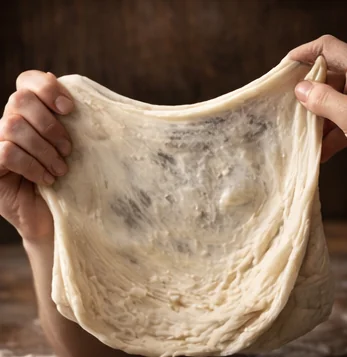
Classic Neapolitan Dough
Tipo 00 flour, 65% hydration, cold fermentation. Produces an open, airy crumb with leopard-charred cornicione. This is the one worth waiting for.
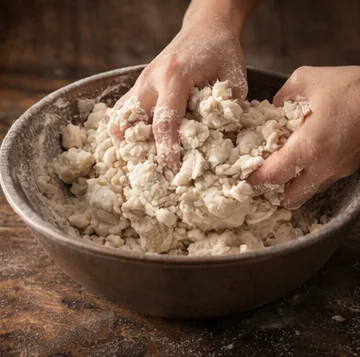
Quick Pizza Dough
Active dry yeast, slightly higher yeast ratio, warm-water activation. Ready in 2 hours. Better than any store-bought dough, and honest about what shortcuts cost.
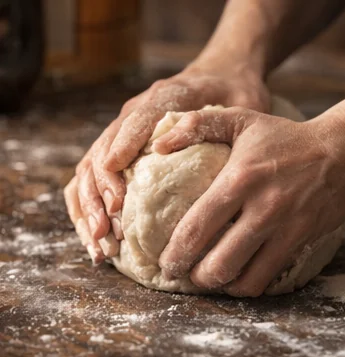
Low-Carb / Keto Dough
Almond flour, psyllium husk, mozzarella base. The texture differs from wheat dough but the result is genuinely crispy and satisfying — not a compromise.
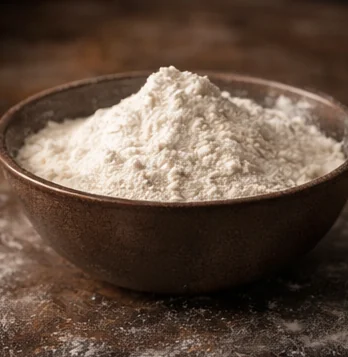
Seeds Pizza Dough
Flaxseed, sesame, and sunflower seeds woven into the base dough. Nutty, slightly crunchy, omega-3 rich. Pairs exceptionally well with vegetarian toppings.
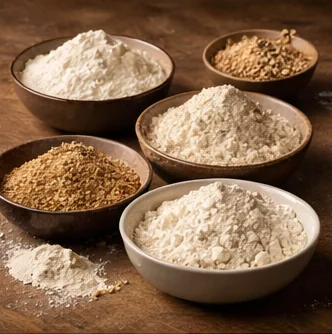
High-Protein Dough
Unflavored whey protein + Greek yogurt replace part of the flour. 18g protein per serving. Denser than classic dough but chewy, satisfying, and actually good.
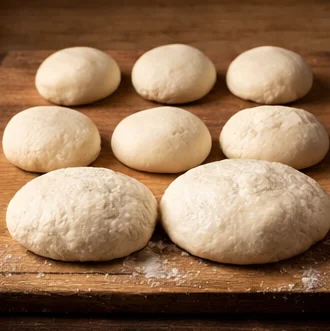
Gluten-Free Dough
Rice flour and tapioca starch, xanthan gum for structure. Crispy on the outside, chewy in the center. The best gluten-free pizza base we've found — no gummy texture.
Dough Comparison: Key Numbers at a Glance
All recipes are calculated per 500g flour (or equivalent). Numbers rounded for clarity.
| Dough | Hydration | Fermentation | Carbs /100g | Protein /100g | Difficulty |
|---|---|---|---|---|---|
| Classic Neapolitan | 65% | 48–72h cold | ~42g | ~10g | Intermediate |
| Quick Dough | 62% | 2–3h warm | ~41g | ~9g | Beginner |
| Low-Carb / Keto | — | No ferment | ~8g net | ~14g | Beginner |
| Seeds Dough | 60% | 3–4h warm | ~35g | ~12g | Beginner |
| High-Protein | 55% | 2–4h warm | ~30g | ~18g | Beginner |
| Gluten-Free | 70% | 1h rest | ~32g | ~4g | Beginner |
The Fermentation Difference
The single biggest upgrade you can make to any pizza is extending fermentation time. Here's what actually happens in the dough during each phase:
0–3 hours (Quick Dough): Yeast becomes active, CO₂ production begins, dough doubles. Flavor is light — yeast-forward, slightly bready. Good, but not complex.
12–24 hours (Medium fermentation): Enzyme activity begins breaking down starch into simpler sugars. Flavor depth increases noticeably. Dough becomes more extensible and easier to stretch without tearing.
48–72 hours cold (Classic Dough): Peak enzyme activity. Complex organic acids develop — lactic and acetic acid — creating flavor that takes time to build and cannot be replicated with shortcuts. The dough is dramatically more fragrant, more digestible, and more elastic. For a deeper explanation, read the Fermentation Science guide.
The tradeoff is only time, not difficulty. A 72-hour dough isn't harder to make — you just start it three days earlier.
Avoid These Common Mistakes
Don't use a rolling pin. It collapses the air structure built during fermentation. Stretch by hand — fingertip pressure from the center outward. Read the Dough Stretching guide for technique.
Don't skip the bench rest. After dividing, dough balls need 30–60 minutes at room temperature before stretching. Cold, tense gluten tears instead of stretching. This is the most common reason beginner dough rips.
Don't add salt directly to yeast. Salt inhibits yeast activity if they're in direct contact. Dissolve salt in water first, or add it to flour before the yeast goes in.
For the complete process — from ingredient selection to final bake — the Complete Pizza Guide covers it in seven chapters.