Why this formula works
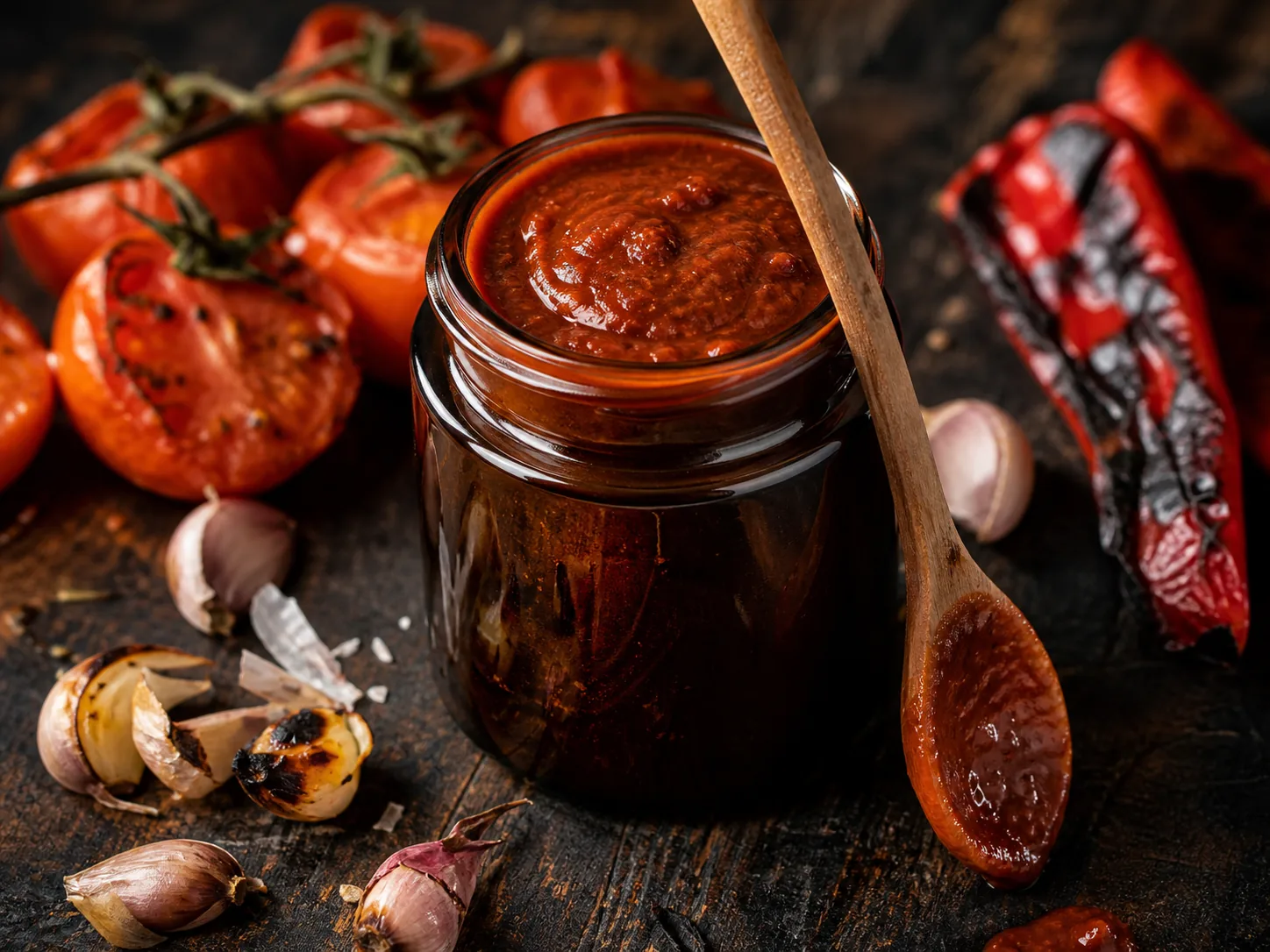
High-heat roasting removes excess water and creates browned vegetable flavors before reduction begins. Vinegar, mustard and tamari balance the natural sweetness, while smoked paprika supports rather than replaces the roast.
Honest timing
| Active preparation | 20 min |
| Cooking / baking | 1 h |
| Elapsed total | 1 h 20 min |
Ingredients
- ripe plum tomatoes, halved800 g (28.2 oz)
- red bell pepper, seeded and cut into chunks180 g (6.3 oz)
- yellow onion, cut into wedges150 g (5.3 oz)
- garlic cloves, unpeeled15 g (0.53 oz)
- olive oil20 g (0.71 oz)
- soft brown sugar50 g (1.76 oz)
- apple cider vinegar50 g (1.76 oz)
- Dijon or medium mustard15 g (0.53 oz)
- tamari soy sauce, certified gluten-free if required15 g (0.53 oz)
- smoked paprika3 g (0.11 oz)
- fine sea salt, divided8 g (0.28 oz)
- freshly ground black pepper1 g
Equipment
- rimmed roasting tray
- blender or immersion blender
- wide heavy saucepan
- fine sieve, optional
- clean 600 ml jar
Exact method
- 1. Heat the oven to 220°C / 428°F fan or 230°C / 446°F conventional. Line a rimmed tray, leaving space between the vegetables.
- 2. Toss tomatoes, bell pepper, onion and unpeeled garlic with olive oil and 4 g salt. Arrange tomatoes cut-side up so their juices concentrate instead of flooding the tray.
- 3. Roast for 30–40 minutes, rotating the tray once. Stop when the onion edges are dark gold, the pepper is blistered and the tomato juices look syrupy—not black.
- 4. Cool for 5 minutes. Squeeze the garlic from its skins and scrape every browned juice from the tray into the blender.
- 5. Blend the roasted vegetables with brown sugar, vinegar, mustard, tamari, smoked paprika, remaining salt and black pepper until completely smooth.
- 6. For a polished sauce, press through a fine sieve. Transfer to a wide saucepan; the larger surface makes reduction faster and more predictable.
- 7. Bring to a gentle simmer, then cook uncovered on low for 18–25 minutes. Stir frequently and scrape the base; tomato sugars scorch easily near the end.
- 8. Run a spatula across the pan. For pizza, the trail should remain open for 1–2 seconds. Remember that the sauce thickens again as it cools.
- 9. Taste on a cooled spoon. Correct sweetness, vinegar and salt in very small steps; do not add more smoked paprika until the sauce is cool enough to judge.
- 10. Cool uncovered for 20 minutes, transfer to a clean jar, label and refrigerate promptly.
How to know it is ready
- Deep brick red with visible gloss, never brown-black.
- Roasted tomato leads; smoke, sweetness and acidity arrive behind it.
- The selected size-based dose holds an even layer without releasing thin liquid.
Troubleshooting
- Too thin: use a wider pan and continue reducing, stirring constantly near the end.
- Tastes bitter: vegetables or paprika burned; dilution cannot fully repair carbonized flavors.
- Too sweet: add vinegar 3–5 g at a time and recheck cold.
- Flat despite enough salt: add a small amount of vinegar before adding more tamari.
How to adapt the base recipe
- Pizza: choose the dose from the size-and-style table; the roasted sauce can be used more generously than a highly sweet commercial glaze.
- Glaze: reduce 5–8 minutes further and brush onto cooked food near the end.
- Burger sauce: cool completely and mix 2 parts sauce with 1 part mayonnaise; this introduces egg.
- General base: adjust only the final balance for the specific dish rather than changing the roasting stage.
Sauce quantity by pizza size and style
| Pizza / style | Sauce | Technical note |
|---|---|---|
| 28–30 cm / 11–12 in, thin and crisp | 70–85 g | Enough for full coverage while preserving a dry center. |
| 28–30 cm / 11–12 in, deliberately juicy | 95–120 g | Use a hot steel or a brief par-bake and limit other wet toppings. |
| 32–35 cm / 13–14 in, regular crust | 110–150 g | A generous roasted-tomato layer without standing liquid. |
| 30×40 cm / 12×16 in tray pizza | 190–250 g | Well suited to the thicker base and longer bake. |
| Deep pan or large family tray | 230–300 g | Valid for a juicy result when the dough and bake are designed around it. |
Storage and food safety
Refrigerate in a clean sealed jar and use within 7 days, or freeze up to 3 months. This is not a shelf-stable canning recipe.
Allergens
Mustard, Soy Depending on the selected product, may also contain: Sulphites.
Always verify every label and cross-contact risk; brand formulations can change.