Practical guide
Cornstarch Substitutes: Choose by the Job
For a simple sauce, start with 10 g potato starch in place of 10 g cornstarch, adding it gradually. Tapioca is another possible option. In a gluten-free pizza base, cornstarch forms part of a balanced flour blend. Choose a substitute by its job and assess the sauce after heating.
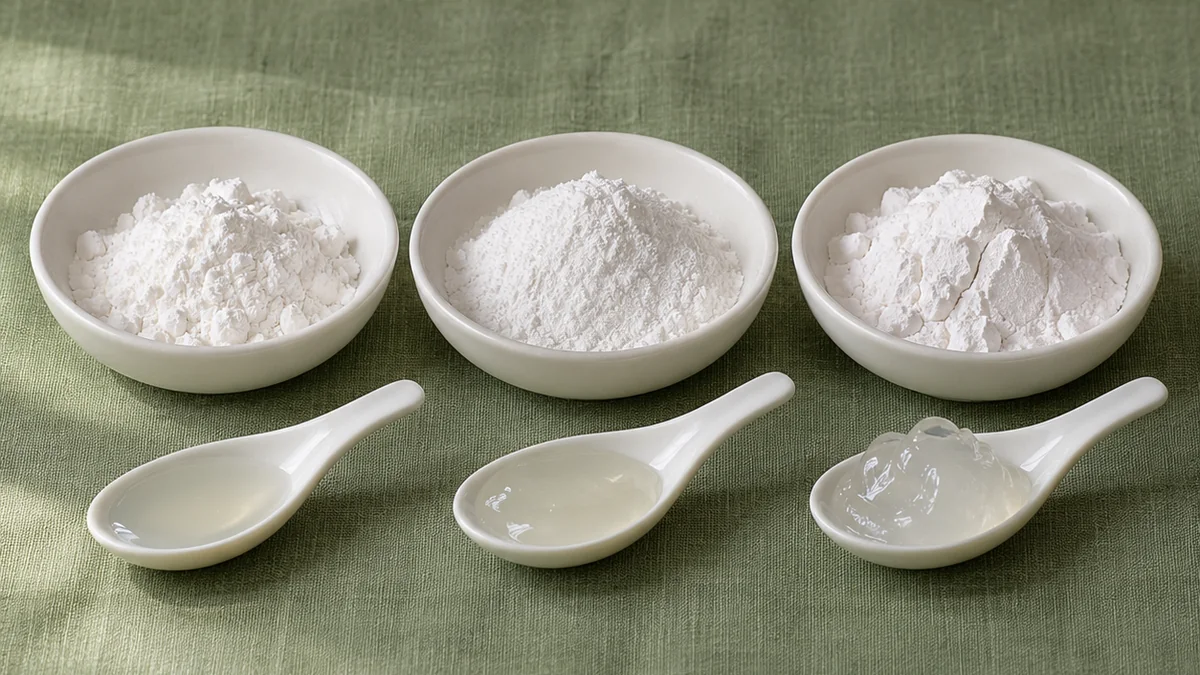
Starting amounts for a small sauce trial
These weights are cautious kitchen starting points for a watery sauce, not guaranteed equal thickening power. Published and manufacturer volume ratios differ. Add only part of a slurry at first and judge the consistency after heating.
| Instead of 10 g cornstarch | Starting amount | Effect | Useful for |
|---|---|---|---|
| Pure potato starch | About 10 g, added gradually | Strong thickening; avoid unnecessary prolonged boiling | A briefly finished sauce. |
| Pure tapioca starch | About 10 g, added gradually | Glossy and more elastic; excess can turn gluey | Fruit or glossy sauces where elasticity is acceptable. |
| Wheat flour | About 15–20 g in a separate small trial | Cloudier and flourier, requiring appropriate cooking | A flour-thickened base sauce; not gluten-free. |
Do not confuse starch and flour
Potato starch is different from whole-potato flour, and corn flour made from the grain differs from pure cornstarch. US cornstarch usually corresponds to the white product often called cornflour in the UK; cornmeal is a different ground-grain ingredient. Check the ingredient list.
For cheese dips and pizza sauce, watch the endpoint
Starch needs sufficient heating to thicken, so a thin cold mixture does not prove the dose is too small. In a cheese dip, changing starch also changes mouthfeel and cooling behaviour. A sauce that flows hot may become much firmer cold; check a spoonful after cooling before thickening the whole batch further.
Pizza dough needs a complete recipe
Starch does not provide wheat gluten. A swap in a gluten-free blend can change elasticity, water demand and browning together. For an important meal, start with the linked complete formula. In your own small comparison, change a limited portion and record liquids carefully. Check gluten-free labelling and cross-contact separately.
References and context
These references explain ingredients and physical principles. The small kitchen comparisons are reproducible suggestions, not a claim of laboratory testing. Follow product labels and appliance instructions.