What Is Gluten?
Gluten is a protein network formed when two wheat proteins—glutenin and gliadin—hydrate and bond through kneading. This network gives dough its elasticity (resistance to stretching) and extensibility (ability to be stretched without tearing). The balance between these two properties determines how your pizza dough handles and bakes.
The Windowpane Test
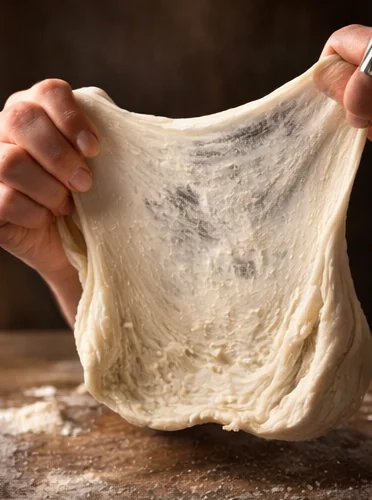
The windowpane test is the definitive indicator of gluten development. Take a small piece of dough and slowly stretch it between your fingers. If you can stretch it thin enough to see light through it without it tearing, gluten is fully developed. If it tears immediately, more kneading is needed.
Kneading Methods
Traditional hand kneading (10–12 minutes) develops gluten through mechanical action. The stretch-and-fold method (used in high-hydration doughs) gently builds gluten over 3–4 hours without aggressive kneading. Stand mixer kneading with a dough hook takes 8–10 minutes. All produce similar results when done correctly.
Autolyse
Autolyse is a resting period of 20–60 minutes after mixing flour and water (before adding salt and yeast). During this rest, gluten begins forming spontaneously without any kneading. This reduces required kneading time significantly and improves extensibility—particularly useful for high-hydration doughs.
Over-Kneading
Yes, it's possible to over-knead dough—particularly with a machine. Over-developed gluten becomes very tight and elastic, difficult to stretch, and produces a tough, chewy crust. Signs: dough that keeps springing back aggressively, feels rubber-like. Solution: cover and rest 30–60 minutes to relax gluten.