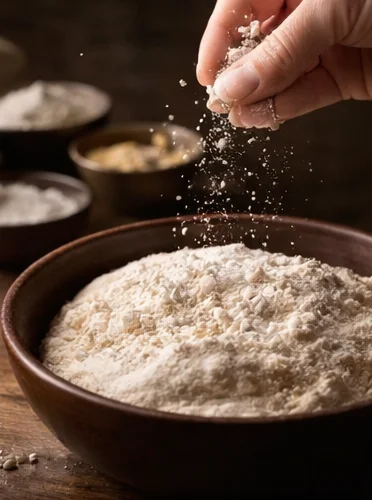
Pizza Flour Types freshly baked with crisp crust
🌾 Flour Science

Pizza Flour: 00 vs Bread Flour

Tipo 00 or bread flour? The answer depends on your pizza style. This guide compares 00 flour vs bread flour vs all-purpose — protein content, gluten strength, hydration needs and which works in a home oven.

← All Science Topics

Flour types at a glance

FlourProteinStyleHydrationHome oven
Tipo 00about 11-12.5%Neapolitan, soft stretch58-65%Excellent at high heat; can stay pale in weak ovens.
Bread flourabout 12.5-14%New York, stronger rim62-70%Very good for baking steel, long fermentation and crisp bases.
All-purpose flourabout 10-11.5%Everyday pizza, thinner base55-62%Easy to find, but less tolerant of high hydration and long fermentation.

For a home oven, Tipo 00 is not automatically the best choice. If your oven only reaches 240-250 °C, bread flour with more protein and longer fermentation can brown better and hold structure more reliably.

FAQ

  • Is Tipo 00 better than bread flour for home pizza? Not always. At 240–250 °C, bread flour often browns better and handles heavy toppings.
  • Can I use all-purpose flour? Yes for quick doughs and thin pizzas, but it tears more easily at high hydration.
  • Does protein content matter? Yes — more protein means stronger gluten and a chewier, stronger rim.

Why Flour Choice Matters

Flour is the backbone of pizza dough. Its protein content determines gluten strength, water absorption, and ultimately the texture of your crust. The milling grade affects extensibility and browning. Choosing the wrong flour for your pizza style is one of the most common mistakes home bakers make.

Tipo 00 Flour (Italian)

Italian Tipo 00 refers to the grind fineness—double zero is the finest grind, producing a silky, smooth flour. Good Tipo 00 for pizza has 11–13% protein. It creates an extensible, smooth dough that bakes with a tender crumb and beautiful browning. The gold standard for Neapolitan pizza. Look for 'W250–W330' on Italian professional flours.

Bread Flour (Strong Flour)

With 12–14% protein, bread flour creates a stronger gluten network. The dough is slightly stiffer and more resilient. Excellent for New York style (needs structure to support large slices), deep dish, and focaccia. Produces a slightly chewier, crispier crust than Tipo 00.

All-Purpose Flour

At 10–12% protein, all-purpose flour works for pizza but is the weakest performer. It produces softer, less elastic dough that tears more easily. Acceptable for quick doughs where a little chewiness doesn't matter. Readily available and inexpensive.

Whole Wheat & Ancient Grains

Whole wheat flour adds nutty flavor and fiber but significantly affects gluten development—the bran cuts gluten strands. A 20% whole wheat blend (80% bread flour, 20% whole wheat) adds flavor without sacrificing too much structure. Pure whole wheat pizza dough requires higher hydration and longer fermentation.

Frequently Asked Questions

Yes—blending is common. 50% Tipo 00 + 50% bread flour gives you the best of both worlds: extensibility from 00 and structure from bread flour. Many Neapolitan pizzerias use blends.
Yes. White flour keeps 1–2 years, whole wheat 6 months. Old flour has less yeast food and produces duller-tasting dough. Store in airtight containers, away from light and moisture.

00 flour vs bread flour — quick answer

Tipo 00 (11–13% protein): finer grind, more extensible dough, tender Neapolitan-style crust. Best for high-heat, short bakes.

Bread flour (12–14% protein): stronger gluten, chewier crust, holds heavy toppings. Best for New York style and deep dish.

All-purpose (10–12% protein): works in a pinch for quick doughs, but tears more easily and produces a softer crust.