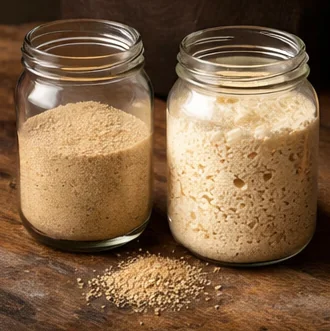
Commercial Yeast
Commercial yeast (Saccharomyces cerevisiae) in fresh, active dry, or instant form is predictable, reliable, and fast. A 500g dough with 2g fresh yeast and 48h cold fermentation produces excellent results. The flavor is clean, slightly sweet, and develops well with time.
Sourdough Starter
A sourdough starter is a fermented mix of flour and water containing wild yeasts and lactic acid bacteria. The wild yeasts leaven the dough; the bacteria produce lactic and acetic acids that create complex, tangy flavors. The best Neapolitan pizzerias use lievito madre—a stiff Italian sourdough mother—for their doughs.
Flavor Comparison
Commercial yeast dough after 72h cold ferment: wheaty, slightly tangy, complex. Sourdough pizza dough: deeply acidic, complex, chewy, with a pronounced tang. Sourdough crusts also develop more dramatic charring in the oven due to higher sugar content from extended enzymatic activity.
Practical Differences
Commercial yeast: predictable timing, consistent results, easier to learn. Sourdough: requires active starter maintenance, longer fermentation, variable results depending on starter strength. Sourdough pizza is harder but the ceiling for quality is higher. Start with commercial yeast, graduate to sourdough.
How to Make Sourdough Pizza Dough
Use 15–20% starter (by flour weight). For 500g flour: 100g active starter, 310ml water, 11g salt. Mix, autolyse 30 min, fold every 30 min for 3 hours. Cold ferment 24–48h. The starter must be active—fed 8–12h before use and doubled.