Why this formula works
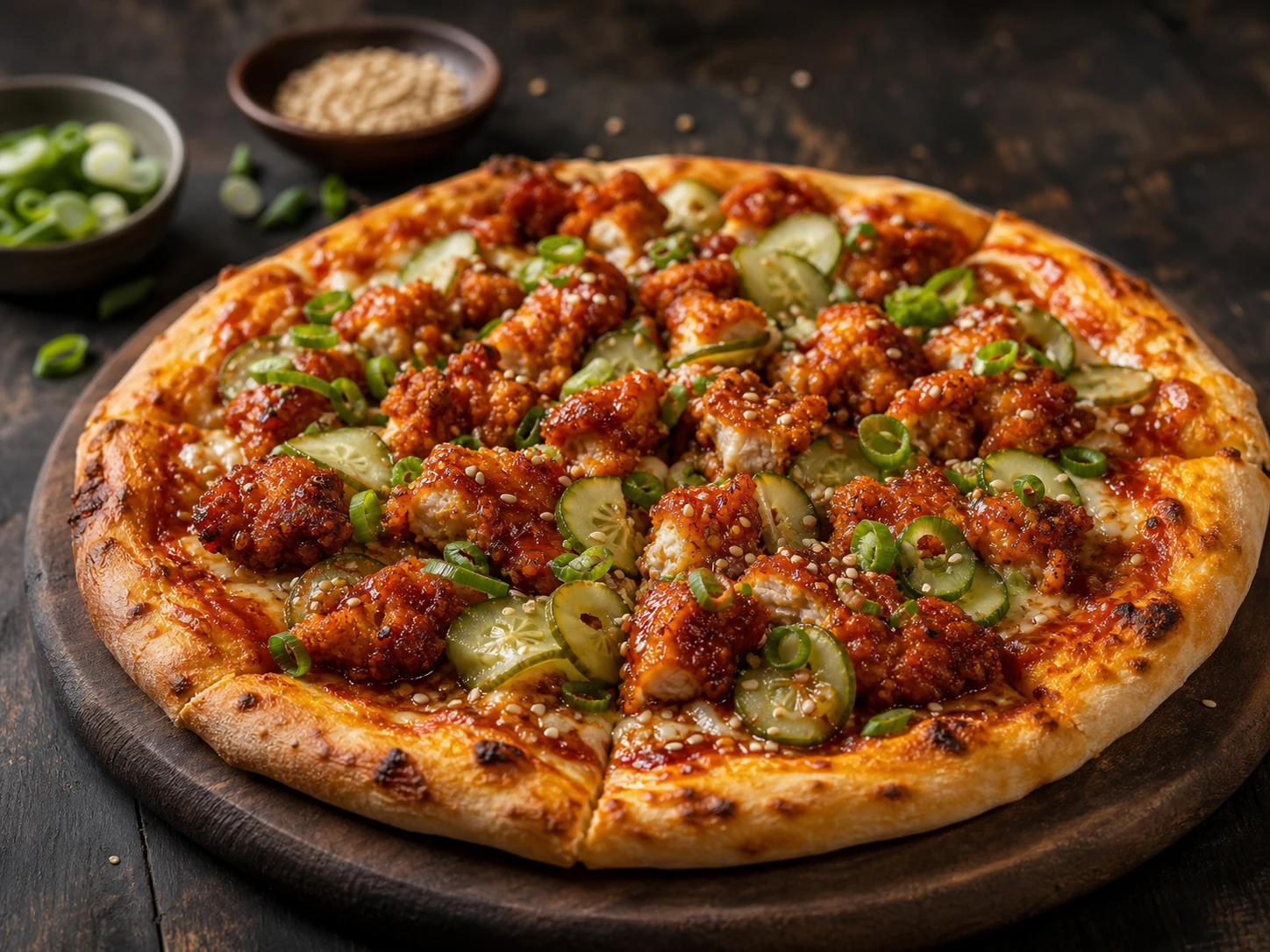
The old short version never explained how the chicken became crisp or safe. Here the chicken is marinated, double-coated and cooked to a measured 74°C / 165°F before it reaches the pizza. Only a thin glaze goes on before the final bake; the rest finishes the pizza so the coating stays crisp.
Honest timing
| Active preparation | 35 min |
| Hydration / proof / preheat | 45 min |
| Cooking / baking | 25 min |
| Elapsed total | 1 h 45 min |
Ingredients
- mature home-oven pizza dough ball250 g (8.8 oz)
- boneless skinless chicken thigh, cut into 2–3 cm pieces160 g (5.6 oz)
- buttermilk50 g (1.76 oz)
- plain wheat flour35 g (1.23 oz)
- cornstarch20 g (0.71 oz)
- fine sea salt, divided3 g (0.11 oz)
- garlic powder1 g
- neutral high-heat oil for shallow frying250 g (8.8 oz)
- thick, lightly seasoned tomato sauce50 g (1.76 oz)
- low-moisture mozzarella, grated80 g (2.82 oz)
- gochujang25 g (0.88 oz)
- tamari soy sauce10 g (0.35 oz)
- honey15 g (0.53 oz)
- rice vinegar10 g (0.35 oz)
- toasted sesame oil5 g (0.18 oz)
- quick-pickled cucumber, thoroughly drained35 g (1.23 oz)
- spring onion, thinly sliced15 g (0.53 oz)
- toasted sesame seeds5 g (0.18 oz)
Equipment
- pizza stone or steel and peel
- instant-read food thermometer
- heavy 20–24 cm skillet
- wire rack over a tray
- three separate bowls for raw, coated and cooked chicken
Exact method
- 1. Place a stone or steel in the oven and preheat at maximum heat for 45 minutes. Set a wire rack beside the stove. Keep every raw-chicken utensil away from cooked chicken and ready-to-eat toppings.
- 2. Mix the chicken with buttermilk, 1 g salt and half the garlic powder. Rest for 15 minutes while the oven heats; this is a short seasoning step, not long-term storage.
- 3. Whisk flour, cornstarch, 1 g salt and the remaining garlic powder. Lift the chicken from the buttermilk, press it firmly into the coating, rest 5 minutes, then coat once more for craggy edges.
- 4. Heat the frying oil in the skillet to 175°C / 347°F. Fry in one uncrowded layer for 4–6 minutes, turning as needed, until deeply golden and every piece reaches 74°C / 165°F. Move it with clean tongs to the rack.
- 5. Whisk gochujang, tamari, honey, rice vinegar and sesame oil until glossy. Reserve 20 g in a clean finishing bowl; toss the hot cooked chicken with only enough of the remaining glaze to coat lightly.
- 6. Open the dough to 28–30 cm on a lightly floured peel. Check that it slides, then spread the tomato sauce and mozzarella evenly, leaving a 1–2 cm rim.
- 7. Bake on the fully heated steel for 4–6 minutes, until the base is nearly browned and the cheese is bubbling. Add the glazed cooked chicken only now; return for 60–90 seconds to heat it without softening the crust.
- 8. Remove when the underside is dry and the chicken is piping hot. Drizzle with the reserved clean glaze, then add drained cucumber, spring onion and sesame.
- 9. Rest for 1 minute and slice. The cold pickle should stay crisp and the chicken coating should still have distinct ridges rather than a wet, breaded surface.
How to know it is ready
- Chicken has reached 74°C / 165°F before topping.
- Coating remains crisp under a thin glossy glaze.
- Pizza center is set and the cold cucumber is dry enough not to leak brine.
Troubleshooting
- Soft coating: drain on a rack, glaze lightly and add chicken only for the final 60–90 seconds.
- Burnt glaze: keep most of it for after baking; honey and gochujang scorch quickly.
- Raw flour patches: press the coating evenly and maintain 175°C / 347°F oil.
- Soggy center: use thick tomato sauce and squeeze the cucumber dry.
How to adapt the base recipe
- For less heat, reduce gochujang to 18 g and add 7 g tomato sauce to the glaze.
- For an air fryer, spray the coated chicken well and cook according to the appliance until 74°C / 165°F; texture will be lighter.
- Do not use raw or merely marinated chicken as a pizza topping and hope the short final bake cooks it.
Storage and food safety
Refrigerate cooked leftovers within 2 hours and use within 2 days. Reheat in a hot oven or air fryer until piping hot. Never store or serve glaze that contacted raw chicken.
Allergens
Gluten (wheat), Milk, Sesame, Soy
Always verify every label and cross-contact risk; brand formulations can change.