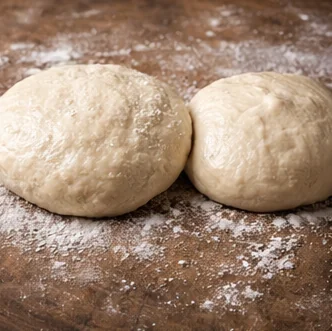
Pizza Science — Know the Why, Fix the Problems
Eight deep-dive articles on the science behind every element of great pizza. If you've ever wondered why your crust isn't crispy, why your dough tears, or why the pizzeria version tastes better — the answers are here.
Why Bother With the Science?
Recipes give you steps. Science gives you understanding. When you know why 72-hour fermentation produces more flavor, you can adapt any recipe confidently. When you understand what gluten does, you stop fighting your dough and start working with it. When you understand oven temperature physics, you stop accepting mediocre crusts and start demanding more from your equipment.
These eight guides are written for home bakers, not food scientists. No jargon for its own sake — only the concepts that actually change results. Each article connects directly to practical outcomes: a crispier base, a more extensible dough, a more flavorful crust.
Your Reading Path
Depending on where you are in your pizza journey, start in a different place:
| Your Level | Start Here | Then Read |
|---|---|---|
| Complete beginner | Fermentation | Hydration → Flour Types |
| Made a few pizzas, want better flavor | Yeast vs Sourdough | Fermentation → Baking Time |
| Dough keeps tearing | Gluten Development | Dough Stretching |
| Crust isn't crispy enough | Oven Temperature | Baking Time → Hydration |
| Want maximum flavor complexity | Fermentation | Yeast vs Sourdough → Flour Types |
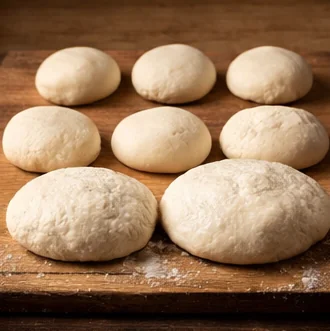
Dough Hydration
Water-to-flour ratio determines texture, bubble structure, and stretchability. Why 65% produces better results than 60% — and why 80% is for experts only.
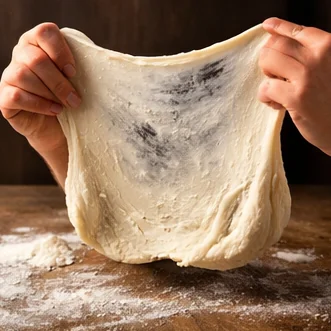
Fermentation Science
The single biggest variable in pizza quality. What happens chemically at 2h, 12h, 48h, and 72h — and why cold fermentation is not just tradition but biochemistry.
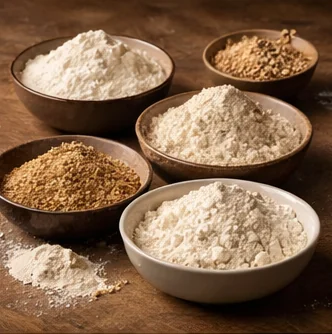
Flour Types Explained
Tipo 00 vs bread flour vs semolina vs alternative flours. Protein content, gluten strength, absorption rates — and which flour produces which result.
Yeast vs Sourdough
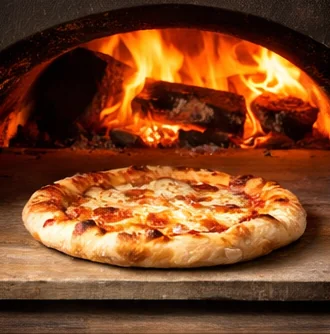
Commercial yeast is predictable. Sourdough is complex. Both produce great pizza — but for different reasons. What each does to flavor, texture, and digestibility.
Oven Temperature
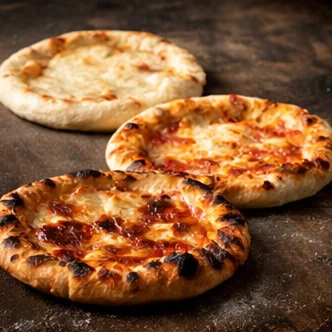
Why 250°C and 450°C produce fundamentally different pizzas. Maillard reaction, baking stone physics, and how to get professional results from a domestic oven.
Gluten Development
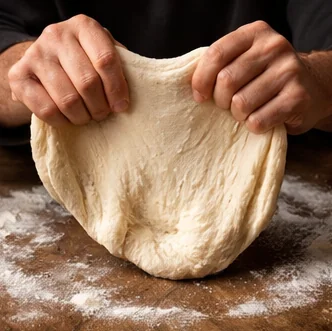
Gluten is the scaffolding that holds every bubble in your crust. How to build it properly, how to test it, and what happens when you don't knead enough — or too much.
Dough Stretching
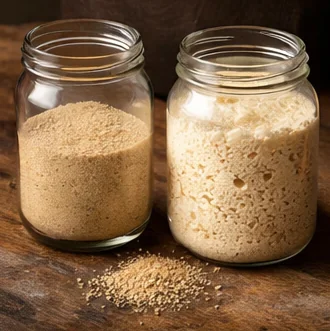
Why rolling pins destroy pizza dough and what to do instead. Gravity, knuckle technique, and how to go from a dough ball to a 30cm base without tearing anything.
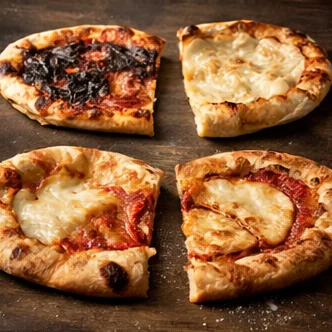
Baking Time & Timing
How baking time interacts with temperature, dough thickness, and moisture content. Why 90 seconds at 450°C isn't the same as 9 minutes at 250°C — even if both pizzas look cooked.
The Three Numbers That Explain Most Pizza Problems
Hydration (60–70%): Too low and the dough is stiff and tough. Too high and beginners can't shape it. For most home bakers, 63–65% is the sweet spot. Read the full Hydration guide for the mechanics.
Fermentation time (2–72h): Flavor develops with time. A 2-hour dough has yeast flavor. A 72-hour dough has organic acids, enzymatic sweetness, and complexity. There's no shortcut, only a decision about how much time you want to invest. The Fermentation guide explains what changes at every stage.
Baking temperature (250–480°C): The Maillard reaction — the browning that creates flavor — accelerates with heat. At 250°C, a home oven produces good pizza in 7–9 minutes. At 450°C, a pizza oven produces exceptional pizza in 90 seconds. The difference is significant but the home oven, used correctly, produces results you'll be proud of. See the Oven Temperature guide.