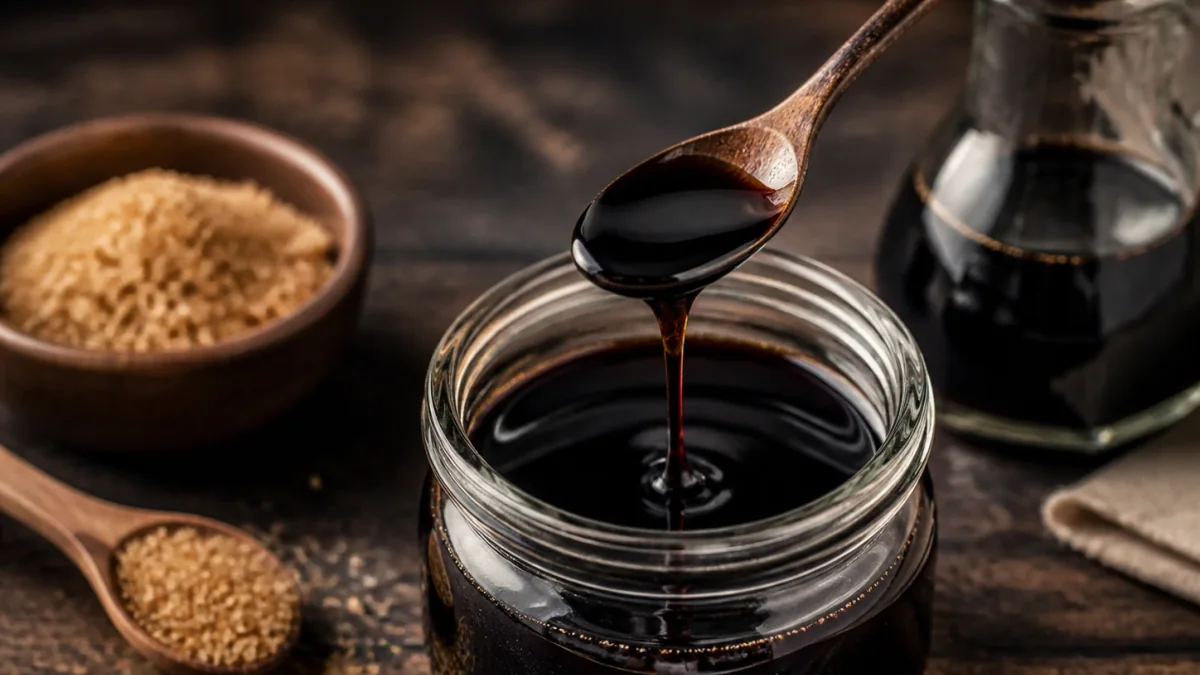
Why this recipe works
A wide pan evaporates water evenly; a modest 8% sugar addition rounds sharp vinegar without hiding it. Stopping while the glaze still looks slightly thin matters because it thickens markedly as it cools.
Timing for this recipe
| Prepare ingredients | 3–5 min |
|---|---|
| Reduce | 10–15 min |
| Allow to cool | 20–30 min |
| Season and finish | 2 min |
| Approximate elapsed time | 35–52 min |
These times include the work and rests described here. Temperature, equipment and ripeness can make things quicker or slower.
Cooking mode
Selected quantity: 12 servings
Original yield: about 100 ml / ⅓ cup plus 1 tbsp · 12 standard servings
Nutrition is estimated per standard serving and for the whole selection.
US units show weights in ounces and liquids in US fluid ounces.
More info
Measuring spoons use 1 tsp = 5 ml and 1 tbsp = 15 ml here.
Estimated nutrition for your selection
| Nutrition | 1 serving (about 10 g) | Selected quantity |
|---|---|---|
| Energy | 19 kcal | 231 kcal |
| Protein | 0.1 g | 1.3 g |
| Carbohydrate | 4.8 g | 57.8 g |
| Fat | 0 g | 0 g |
| Salt | 0.05 g | 0.66 g |
Ingredients
12 servings · 1× original recipe
Original yield/size: about 100 ml / ⅓ cup plus 1 tbsp
The ingredient list shows the totals for this selection. Amounts per item stay the same.
- dark balsamic vinegar, preferably 6% acidity250 g (8.8 oz)
- light brown sugar20 g (0.71 oz)
- fine sea salt0.5 g
Equipment
- small wide stainless-steel saucepan
- digital scale
- heatproof spatula
- cold saucer for the flow test
Exact method
The pans and vessels listed fit the original quantity. For more servings, plan enough vessels at the same filling depth and prepare each batch as described. Do not multiply cooking times by the number of servings. Look for the doneness cues in the recipe.
- Reduce balsamic vinegar and sugar Combine balsamic vinegar and sugar in a small stainless-steel pan. Simmer gently uncovered; a rolling boil can burn the edges.
- Test a drop on a cold plate After about 10–15 minutes, put a drop on a cold plate and wait 30 seconds. It should move slowly rather than set solid. Hot glaze is thinner than cooled glaze.
- Season with salt and cool Remove from the heat, stir in the salt and cool. Loosen an overly thick cooled glaze with water a teaspoon at a time. Drizzle sparingly after baking.
Estimated nutrition
The estimate treats 100 mL of glaze as about 120 g. The yield depends on how far you reduce it.
| Nutrient | 1 serving (about 10 g) | Whole batch |
|---|---|---|
| Energy | 19 kcal | 231 kcal |
| Protein | 0.1 g | 1.3 g |
| Carbohydrate | 4.8 g | 57.8 g |
| Fat | 0 g | 0 g |
| Salt | 0.05 g | 0.66 g |
Using this component well
A few thin lines are enough
Start with 5–10 g on a 28–30 cm pizza and add after baking. The glaze is much more concentrated than the original vinegar. Use sparingly with figs and goat cheese so the fruit remains distinct.
If it sets in the jar
Do not reduce it further: judge the finished cold texture. Warm a small portion and stir in water by the teaspoon; a large splash can make it runny again.
Allergens
No EU/UK major allergen is intentionally included in the base formula. Depending on the selected product, may also contain: Sulphites.
Always verify every label and cross-contact risk; brand formulations can change.
Comments are optional. By submitting a comment, you consent to public display of your text and any name you provide; you may withdraw this consent at any time for the future. The text is sent to OpenAI for abuse screening. Privacy and deletion.