Practical guide
Pale Pizza Crust: Check Heat, Flour and Proofing
A pale rim does not automatically need more time or sugar. First check whether the dough is already set and dry, and whether the oven supplies enough heat above and below. Surface flour and the intended style also change its appearance.
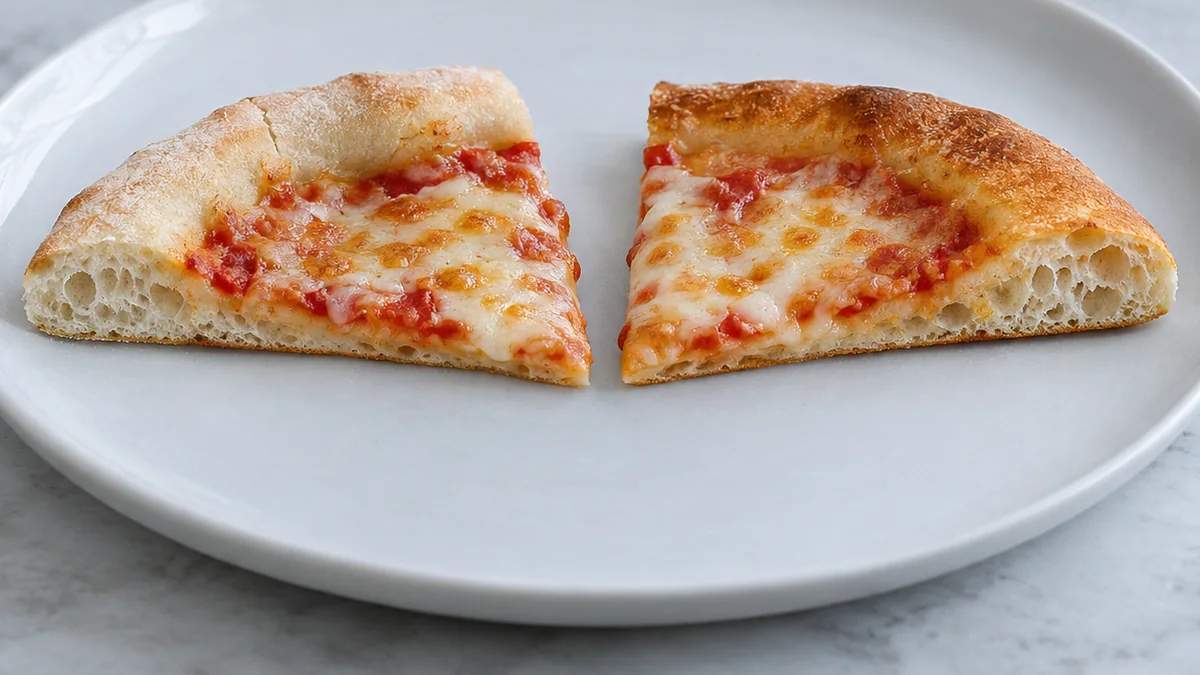
Judge colour together with dryness
A hard, dry rim that is still pale will usually become drier with more baking. A heavy rim with sticky raw crumb needs more heat penetration. Neapolitan pizza has scattered dark spots on a softer edge; pan pizza without top heat can stay much paler above. Do not judge different styles against the same photograph.
| Base | Rim | Check first |
|---|---|---|
| Pale | Pale and still soft | Preheating, actual temperature and the specific recipe’s bake. |
| Dark | Pale above | Balance between baking surface and upper heat; consider a higher rack next time. |
| Dry and baked | Light, with white dust | Excess dusting flour; do not immediately change hydration or fermentation. |
Match the baking surface and heat path
In a home oven, the thermostat light mainly reflects the air temperature, not complete heating of a heavy steel. Follow the recipe and accessory instructions. If the base is already too dark, more steel heat will not fix a pale rim. A brief broiler finish is an option only when the base is ready and needs constant observation.
Why sugar is not a universal repair
A home-oven formula with a little sugar browns differently from a lean dough intended for intense heat. Do not transfer that addition blindly to a pizza-oven formula, where the surface can scorch too early. With persistently pale results, also check a major flour change or excessive fermentation instead of kneading in spoonfuls of sugar.
Make one useful comparison next time
- Keep dough weight, size and toppings unchanged.
- First change either rack position or preheating time, not both.
- Inspect base and crumb immediately after baking; a few minutes on a plate changes moisture.
References and context
These references explain ingredients and physical principles. The small kitchen comparisons are reproducible suggestions, not a claim of laboratory testing. Follow product labels and appliance instructions.