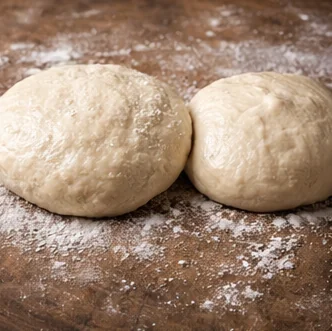
Pizza-Wissen – verstehe das Warum, löse die Probleme
Acht vertiefende Artikel über die Wissenschaft hinter guter Pizza. Wenn du dich fragst, warum dein Boden nicht knusprig wird, der Teig reißt oder die Pizzeria-Version besser schmeckt, findest du hier die Antworten.
Warum Pizza-Wissen hilft
Rezepte geben dir Schritte. Wissen gibt dir Verständnis. Wenn du weißt, warum 72-Stunden-Fermentation mehr Geschmack erzeugt, kannst du jedes Rezept sicherer anpassen. Wenn du Gluten verstehst, kämpfst du nicht mehr gegen den Teig. Wenn du Ofentemperatur verstehst, holst du mehr aus deiner Ausstattung heraus.
Diese acht Ratgeber sind für Hobbybäcker geschrieben, nicht für Lebensmittelchemiker. Kein Fachjargon um seiner selbst willen – nur Konzepte, die echte Ergebnisse verändern: knusprigerer Boden, dehnbarerer Teig, aromatischere Kruste.
Dein sinnvoller Lesepfad
Je nach Erfahrung startest du an einer anderen Stelle:
| Dein Stand | Hier starten | Danach lesen |
|---|---|---|
| kompletter Anfänger | Fermentation | Hydration → Mehltypen |
| schon ein paar Pizzen gemacht, mehr Geschmack gewünscht | Hefe vs. Sauerteig | Fermentation → Backzeit |
| Teig reißt beim Formen | Glutenentwicklung | Teig Stretching |
| Boden wird nicht knusprig genug | Ofentemperatur | Backzeit → Hydration |
| maximale Aromakomplexität gewünscht | Fermentation | Hefe vs. Sauerteig → Mehltypen |
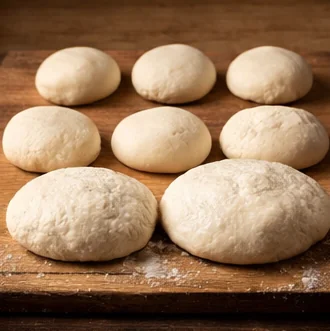
Teighydration
Das Verhältnis von Wasser zu Mehl bestimmt Textur, Blasenstruktur und Dehnbarkeit. Warum 65 % oft besser sind als 60 % – und 80 % eher für Fortgeschrittene ist.
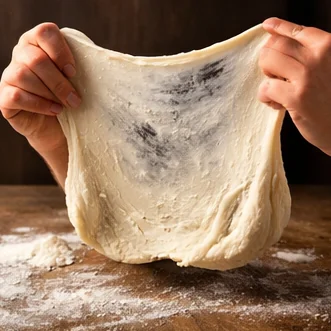
Fermentationswissenschaft
Der größte Faktor für Pizzaqualität. Was nach 2, 12, 48 und 72 Stunden chemisch passiert – und warum kalte Fermentation nicht nur Tradition, sondern Biochemie ist.
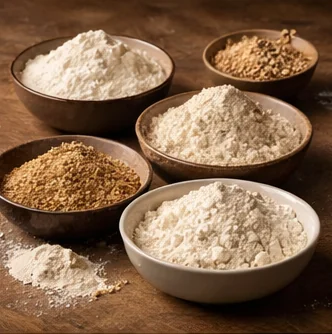
Mehltypen erklärt
Tipo 00, Brotmehl, Semola und alternative Mehle: Proteingehalt, Glutenstärke, Wasseraufnahme und welches Mehl welches Ergebnis bringt.
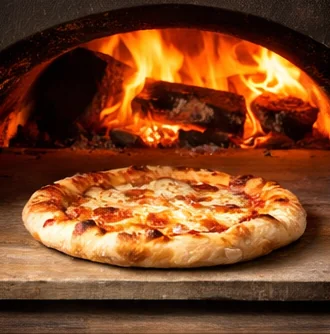
Hefe vs. Sauerteig
Industriehefe ist berechenbar, Sauerteig komplex. Beides kann großartige Pizza ergeben – aus unterschiedlichen Gründen. Hier geht es um Geschmack, Textur und Bekömmlichkeit.
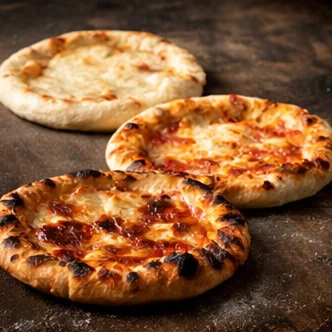
Ofentemperatur
Warum 250 °C und 450 °C völlig unterschiedliche Pizzen ergeben: Maillard-Reaktion, Backsteinphysik und bessere Ergebnisse aus dem Haushaltsherd.
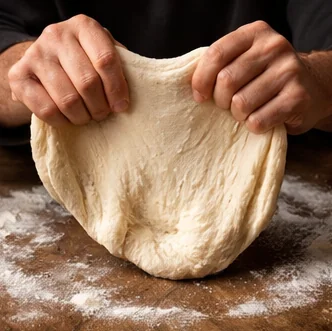
Glutenentwicklung
Gluten ist das Gerüst, das jede Luftblase im Rand hält. So baust du es auf, testest es und erkennst, was bei zu wenig oder zu viel Kneten passiert.
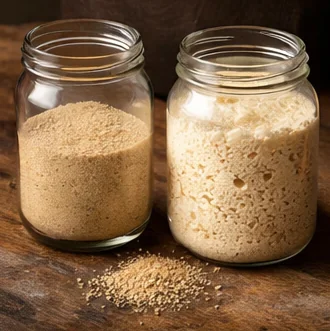
Teig Stretching
Warum Nudelholz Pizzateig zerstört und was besser funktioniert: Schwerkraft, Knöcheltechnik und der Weg vom Teigling zum 30-cm-Boden ohne Risse.

Backzeit & Timing
Wie Backzeit, Temperatur, Teigdicke und Feuchtigkeit zusammenspielen. Warum 90 Sekunden bei 450 °C nicht dasselbe sind wie 9 Minuten bei 250 °C – auch wenn beide Pizzen gar aussehen.
Drei Zahlen erklären die meisten Pizza-Probleme
Hydration (60–70 %): Zu niedrig: der Teig wird steif und zäh. Zu hoch: Anfänger bekommen ihn kaum geformt. Für die meisten Hobbybäcker sind 63–65 % ein guter Bereich. Lies den vollständigen Hydrations-Ratgeber für die Details.
Fermentationszeit (2–72 h): Geschmack entwickelt sich mit Zeit. Ein 2-Stunden-Teig schmeckt eher hefig. Ein 72-Stunden-Teig bringt organische Säuren, enzymatische Süße und Komplexität. Es gibt keine Abkürzung, nur die Entscheidung, wie viel Zeit du investieren willst. Der Fermentations-Ratgeber erklärt, was sich in jeder Phase verändert.
Backtemperatur (250–480 °C): Die Maillard-Reaktion – die Bräunung, die Geschmack erzeugt – wird durch Hitze beschleunigt. Bei 250 °C schafft ein Haushaltsherd gute Pizza in 7–9 Minuten. Bei 450 °C schafft ein Pizzaofen außergewöhnliche Pizza in 90 Sekunden. Richtig genutzt liefert auch der Haushaltsherd Ergebnisse, auf die du stolz sein kannst. Siehe den Ofentemperatur-Ratgeber.
Beginne mit dem sichtbaren Problem
Nutze den Lesepfad als Diagnose, statt alle Themen der Reihe nach zu lesen. Ordne das Symptom den Ratgebern zu, die Teigstruktur, Zutaten oder die passende Backvariable erklären.
- Wenn der Teig reißt, lies zuerst Glutenentwicklung und danach Teigformen.
- Bleibt der Boden weich, starte mit Ofentemperatur und Backzeit und prüfe anschließend die Hydration.
- Für mehr Aroma vergleiche Fermentation, Hefe und Sauerteig sowie Mehltypen.