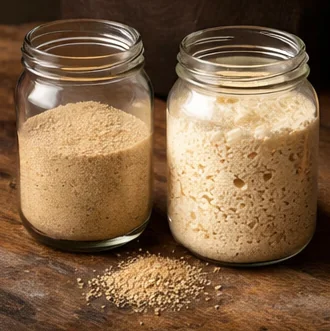
Hefe vs. Sauerteig
Hefe vs. Sauerteig erklärt die Technik hinter besserer Pizza: Teigstruktur, Hitze, Feuchtigkeit und Backverhalten.
Warum das wichtig ist
Wenn du die Ursache verstehst, kannst du Fehler korrigieren: weicher Boden, zäher Rand, blasser Teig oder zu schwerer Belag haben fast immer technische Gründe.
- Hydration steuert Dehnbarkeit und Krume
- Fermentation entwickelt Aroma
- Ofenhitze entscheidet über Boden und Rand
Passende Seiten
Praktische Anwendung in der Küche
Hefe vs. Sauerteig ist kein reines Theorie-Thema. Der Nutzen liegt darin, dass du beim Backen schneller erkennst, warum ein Teig reißt, klebt, trocken wird oder im Ofen nicht genug aufgeht.
Ändere immer nur einen Faktor gleichzeitig: Wasseranteil, Ruhezeit, Mehltyp, Temperatur oder Backdauer. So findest du heraus, welche Stellschraube wirklich verantwortlich ist.
Für konstante Ergebnisse lohnt es sich, Mengen in Gramm zu wiegen, die Raumtemperatur grob zu notieren und nach jedem Backen kurz festzuhalten, was beim nächsten Mal anders werden soll.
- erst messen, dann verändern
- Ofen vollständig vorheizen
- Teigruhe, Hydration und Mehltyp gemeinsam bewerten
Häufige Fehler vermeiden
Viele Probleme entstehen durch zu viel Belag, zu wenig Vorheizen oder einen Teig, der nicht genug entspannen konnte. Bevor du das Rezept änderst, prüfe deshalb zuerst Ofentemperatur, Backfläche und Teigzustand.
Ein einfacher Test hilft: Wenn der Teig beim Formen zurückspringt, braucht er mehr Ruhe. Wenn der Boden blass bleibt, fehlt Hitze von unten. Wenn die Mitte weich wird, war der Belag wahrscheinlich zu feucht oder zu schwer.