Practical guide
Sticky Pizza Dough: Water, Proofing and Launching
Slight tackiness can be normal. Dough that flows like a film, cannot be lifted or sticks only after topping presents different problems. They need different responses; kneading in handfuls of flour changes the recipe.
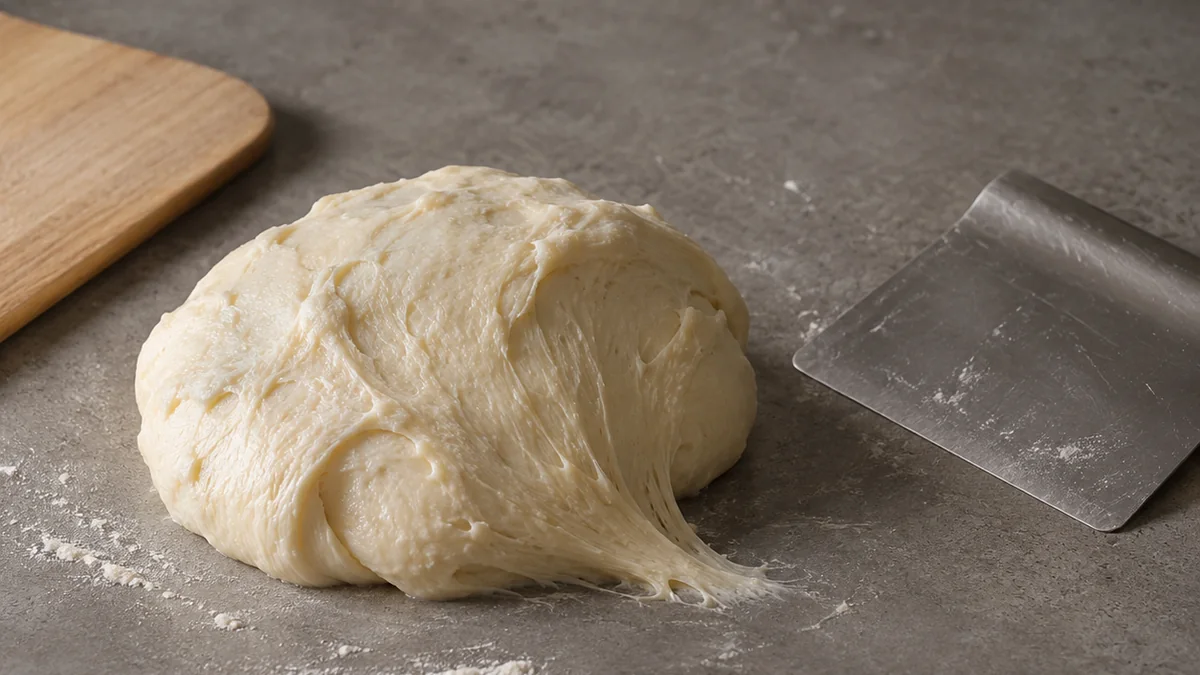
Check hydration before trying to rescue it
Hydration is water divided by flour. With 500 g flour and 325 g water it is 65%. To try three percentage points less water next time, use 310 g instead: 500 × 0.62. Here that change is 15 g water, not three percent of the finished dough weight.
Count the flour and water in a sourdough starter too. Yogurt, milk and egg are not pure water, so this simple calculation cannot fully compare a skyr crust with a flour-and-water dough. Record every extra liquid addition.
When a rest helps and when it does not
| Situation | Useful | Unhelpful |
|---|---|---|
| Freshly mixed, rough dough | Allow the covered hydration rest, then knead or fold as directed. | Add flour immediately until it seems dry. |
| Aerated dough with slight tackiness | Use a scraper, modest dusting and efficient shaping. | Drag the same patch across the bench repeatedly. |
| Very warm, overproofed dough | Use a smaller pan format if still workable; shorten the next schedule. | Wait indefinitely or add more water. |
Sticking on the peel is often a timing problem
The peel must be dry and free of dried sauce. Shape, top efficiently and use a small shake to check movement. Waiting under a wet topping can anchor a base that initially slid well. Carefully lift a stuck edge and add a little suitable dusting flour; do not launch blindly if sauce is escaping through a hole.
Dusting does not change the dough’s allergens
Rice flour can be useful for dusting, but it does not make wheat dough gluten-free. A gluten-free pizza needs an appropriate complete formula, clean equipment and a suitable cooking surface. Brush away excess dusting flour; loose dark particles can be burnt flour.
References and context
These references explain ingredients and physical principles. The small kitchen comparisons are reproducible suggestions, not a claim of laboratory testing. Follow product labels and appliance instructions.