Practical guide
Pizza Dough Tears or Snaps Back: What to Change
Shrinking and tearing are different problems. Smooth dough that contracts often needs relaxation; thin holes may come from cold dough, a dry skin, weak development or overproofing. Check its condition before pulling harder.
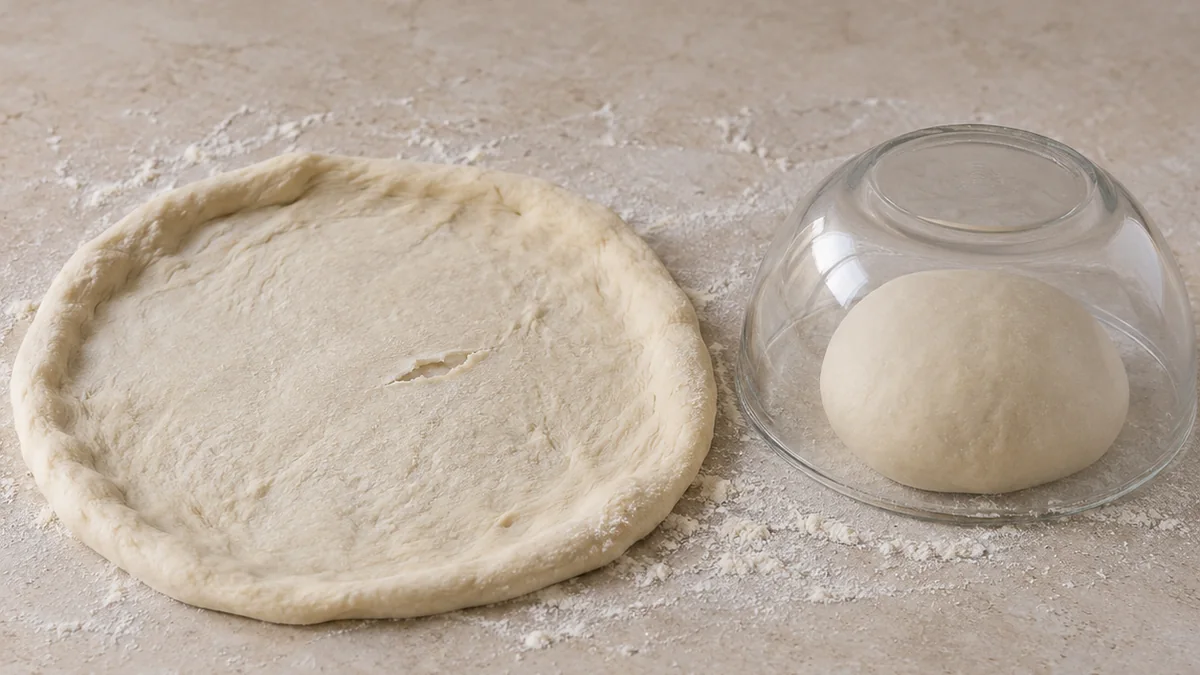
Three checks before adding flour
| Dough condition | What it suggests | Next step |
|---|---|---|
| Smooth and elastic, but contracts when stretched | Tight gluten, possibly cold dough | Cover and rest for 15–20 minutes, then stretch gently again. |
| Dry, leathery surface; cracks start outside | Poor covering during proofing | Do not add a flour crust. Cover effectively next time. |
| Slack, sticky dough that flows and tears easily | Weak structure or overproofing | Do not force a thin circle; consider a smaller pan pizza. |
Resting does not mean unlimited proofing
A short rest can relax tight dough, but it does not rebuild badly overproofed dough. Keep it covered to avoid creating a new skin while waiting. Cold dough needs warming according to ball size and room temperature; a fixed fifteen minutes is not always sufficient.
Stretch a little farther than before, supporting the dough rather than pulling one thin spot. Work flat or over the backs of your hands, leaving the rim intact where an airy edge is intended. A rolling pin suits intentionally rolled thin styles, but is not a neutral repair for every pizza dough.
Close small holes before topping
Pinch a small hole closed on a lightly floured surface and avoid stretching that spot paper-thin again. Check that the base still slides on the peel. Sauce escaping through a hole can glue it down. For extensive damage, smaller pieces or an appropriate oiled pan can be the more practical dinner.
What to change in the next batch
- Plan mixing and folds so the dough has structure before its final proof.
- Match hydration to the actual flour. Less water may help handling but does not replace suitable flour and fermentation.
- Record temperature and maturity signs. Longer is not automatically better; shorten the schedule or refrigerate at the right stage if overproofing occurs.
References and context
These references explain ingredients and physical principles. The small kitchen comparisons are reproducible suggestions, not a claim of laboratory testing. Follow product labels and appliance instructions.