Practical guide
Soggy Pizza Middle: Fix Water and Bottom Heat
A wet centre may be whey or tomato juice, while a pale, sticky dough layer underneath needs more baking. Lift the base and inspect the crumb before changing the oven. Extra top heat alone does not solve the cause.
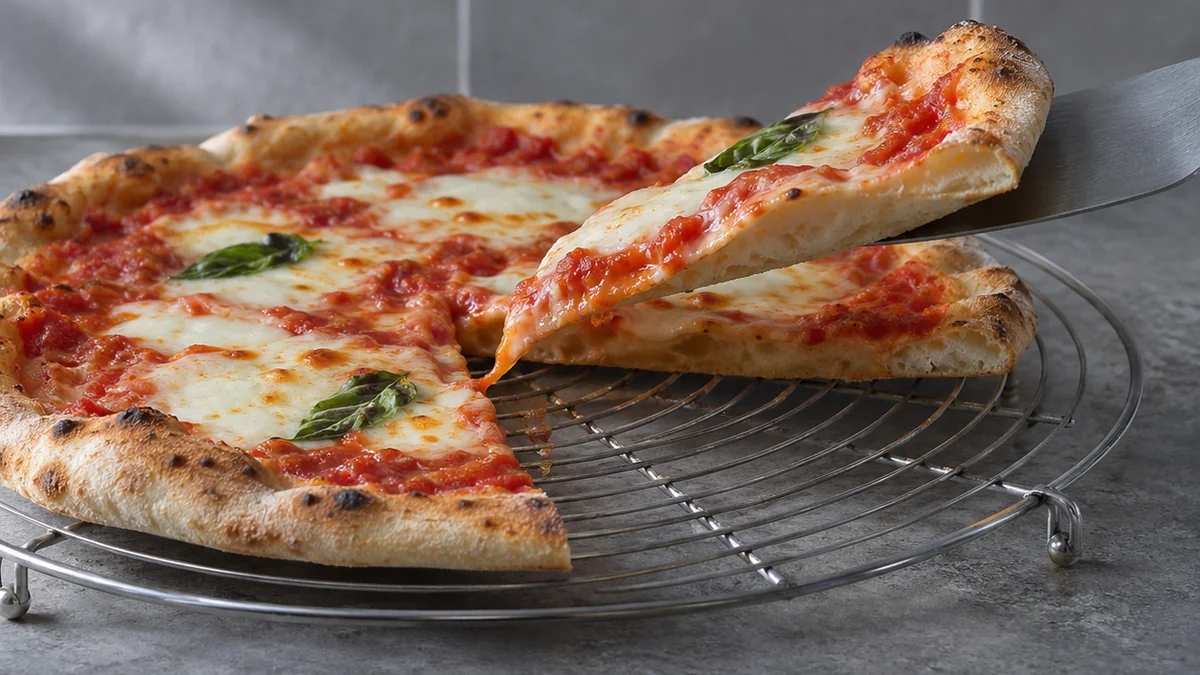
Identify the cause before changing the recipe
| What you see | Likely cause | Useful action |
|---|---|---|
| Clear liquid around melted cheese; base already browned | Water released by cheese or toppings | Carefully remove free liquid rather than drying the finished crust for several more minutes. |
| Sticky dough line and pale underside | Insufficient bottom heat or an overly thick centre | Move carefully onto the fully heated surface and watch browning closely. |
| Base was crisp but softens on the plate | Steam trapped beneath the pizza | Let it steam briefly on a rack before plating. |
Do not confuse a soft, fully baked Neapolitan centre with raw dough. That style stays more flexible than a thin tavern crust. Judge a set crumb and the underside expected for the recipe, rather than demanding every slice remain rigid.
Prepare the topping instead of baking off excess water
Tear fresh mozzarella and drain it under refrigeration, then blot the surface before topping. Allow this draining time in the recipe plan. Brown mushrooms in batches and squeeze spinach. Drain tomatoes only as appropriate to the actual sauce recipe.
For a manageable next attempt, keep dough weight and pizza size unchanged and change one topping quantity or preparation. That lets you assess less tomato or better-drained cheese separately. Changing hydration, temperature, cheese and time together hides the cause.
Separate home-oven, pizza-oven and pan methods
- Home oven: fully preheat the baking surface. If the top is already browning, a lower rack can be more useful than the broiler.
- Pizza oven: measure the floor where the pizza cooks. After several pizzas, the floor may have cooled despite a visible flame.
- Pan: a thick raw base will not automatically crisp under a closed lid. Follow the pan recipe’s setting or turning stage.
Make the next bake easier to diagnose
Record dough weight, diameter, tomato and cheese weights, baking surface and the condition before baking. A photo of the underside often explains more than another topping photo. Do not eat visibly raw flour dough; clean hands and work surfaces afterwards.
References and context
These references explain ingredients and physical principles. The small kitchen comparisons are reproducible suggestions, not a claim of laboratory testing. Follow product labels and appliance instructions.